Lake segment
What 'waterfront' actually means at Smith Mountain Lake
Waterfront, water-access, and lake-view describe three different things at SML — with three different price ceilings. A practical guide to dock rights, the Appalachian Power easement, and what to read in the title commitment.
Smith Mountain Lake is a man-made reservoir, and the words people use for it on listing sheets are not interchangeable. Waterfront, water-access, and lake-view describe three different things, with three different price ceilings and three different futures. Knowing which one you're buying — and what rights actually transfer at closing — is the single biggest variable buyers underestimate at this lake.
Waterfront — the parcel touches the shoreline
A waterfront parcel at Smith Mountain Lake has a deeded property line that ends at the project boundary maintained by Appalachian Power (the utility that operates the dam and the reservoir under a FERC license). The lake itself is owned by Appalachian Power; the land up to the project boundary belongs to the homeowner. That distinction matters because almost every shoreline structure — docks, boathouses, lifts, jet-ski ports, even retaining walls below a certain elevation — sits on or extends over land governed by Appalachian's Shoreline Management Plan, not by the deed.
What you do get as a waterfront owner: the right to apply for and maintain a dock permit, the right to use the shoreline for swimming and tying off, and the right to control the land up to the property line. What you don't automatically get: a guaranteed dock size, immunity from drawdown, or the right to fill in or hard-bank the shoreline.
Water-access — the community touches the shoreline, you don't
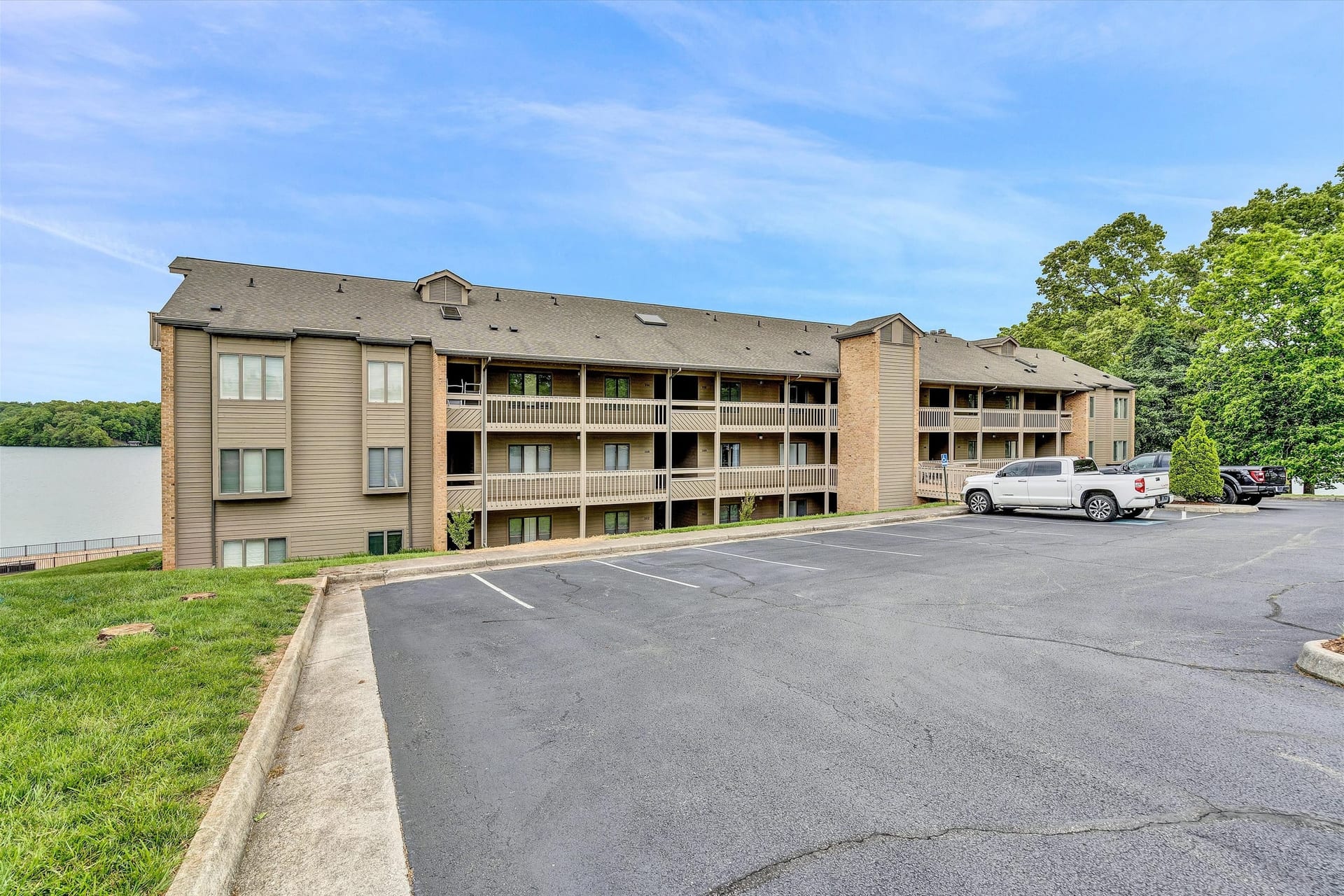
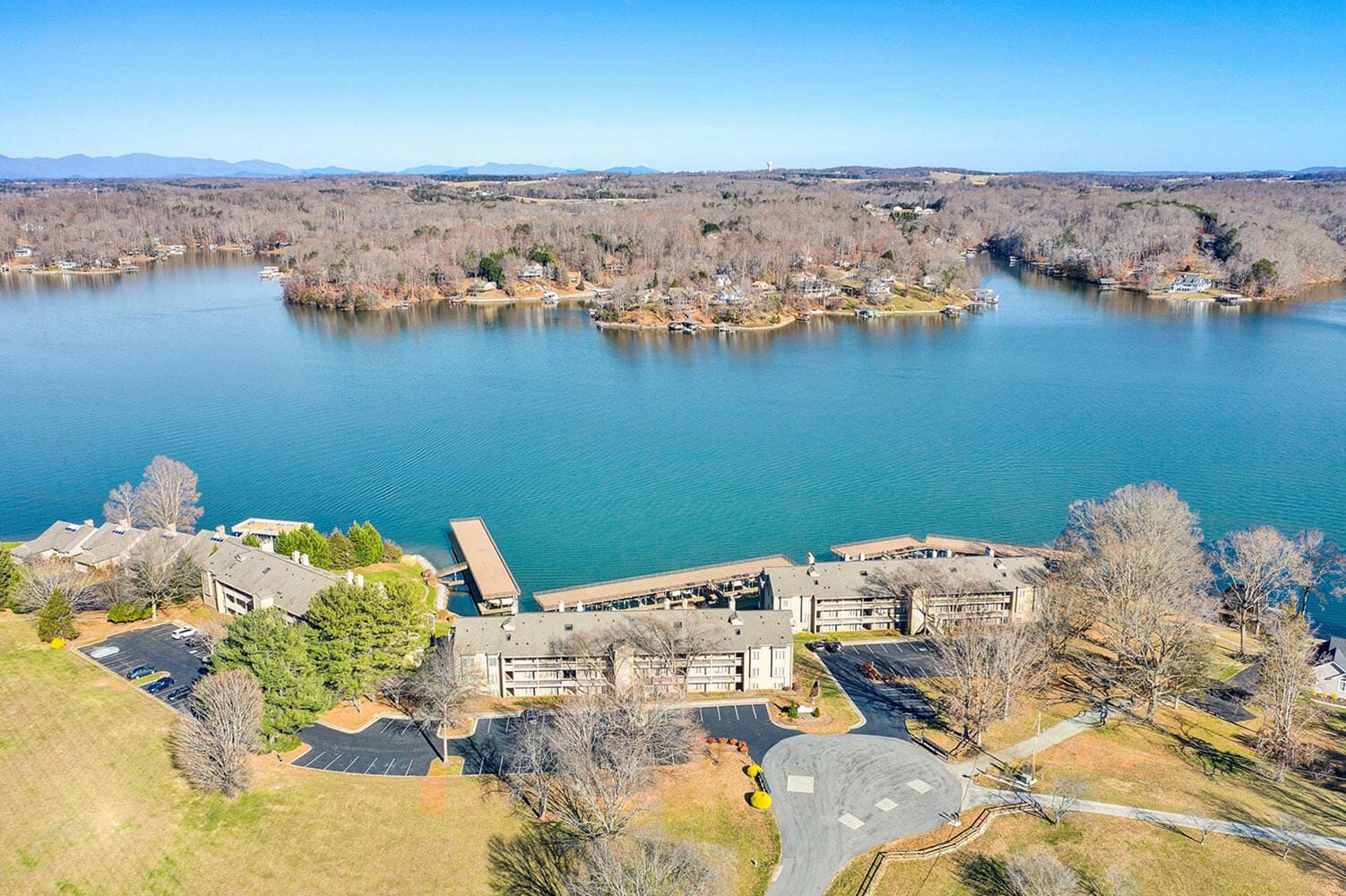
Water-access homes are inside developments where the HOA, the developer, or a private association holds the shoreline parcel and lets owners use it under defined rules. Westlake, parts of The Water's Edge, and a handful of older subdivisions on the Bedford side work this way. The access can be excellent — a private marina, a shared dock with assigned slips, a swim beach, a boat launch — and it can also be modest, like a path down to a shared kayak rack.
Three things to read before you fall for a water-access home: the HOA covenants (look for slip-assignment rules and waiting lists), the shoreline easement language (does access travel with the deed, or is it conditional on dues?), and the marina's actual capacity versus the number of homes that share it.
Lake-view — you can see it from the porch
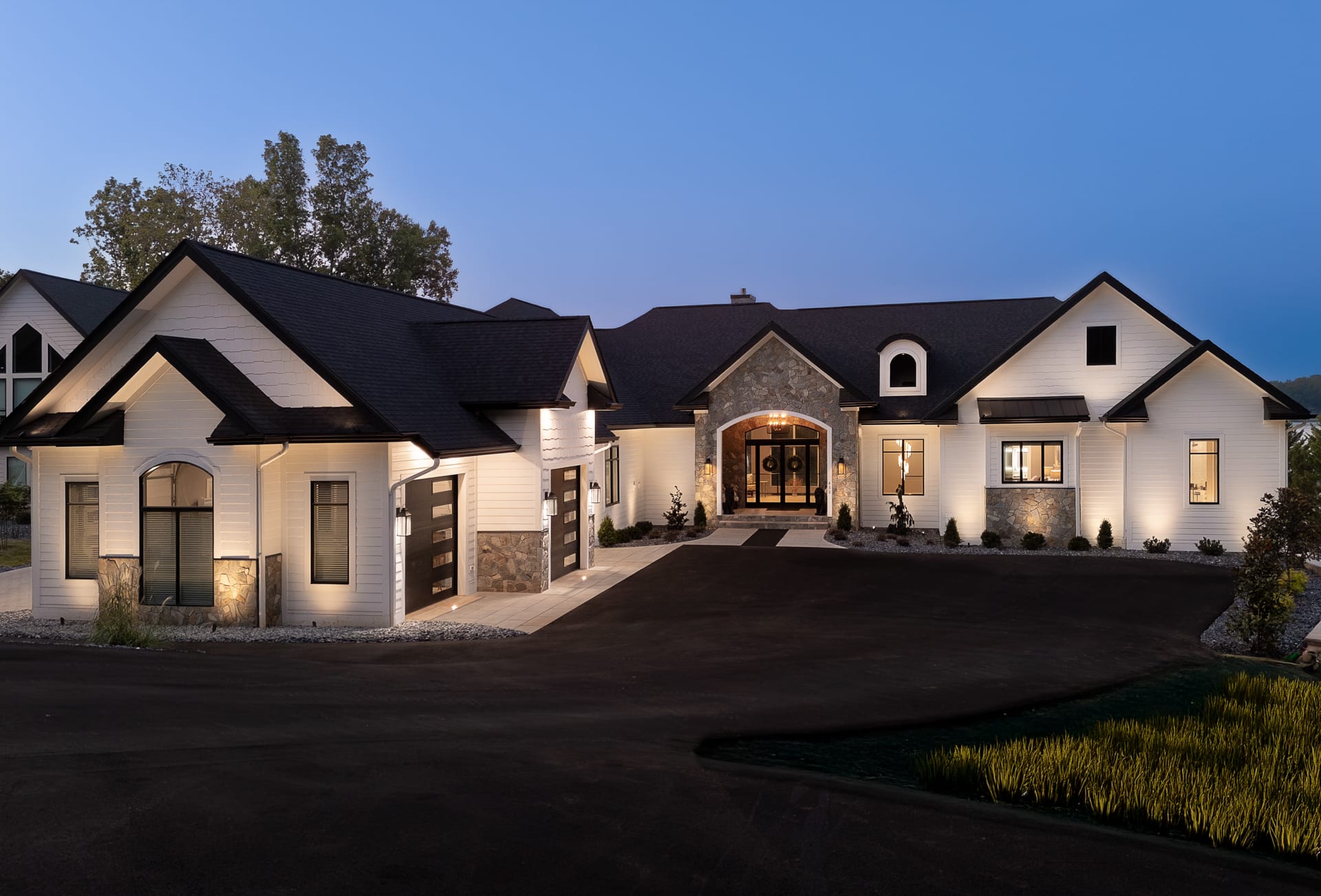
Lake-view homes are exactly that: homes with a view, no shoreline parcel and no formal access. They often sit on ridges above the lake — beautiful, quieter, and priced well below comparable waterfront. A lake-view home is a perfectly good lake home if "the lake" you're buying is the view itself. It is not a substitute for waterfront if you intend to keep a boat.
Dock rights, permits, and the title commitment
A real dock permit at SML is issued by Appalachian Power, classified by Tier (a function of cove depth at winter drawdown), and tied to the parcel — not to the homeowner. Existing permitted docks transfer with the sale. New docks, dock expansions, lifts, and boathouses all require fresh permits, and Tier 3 coves (the shallow ones) carry real restrictions on what can be built.
When the title commitment arrives, three things deserve a careful read: the project boundary easement, any utility or right-of-way easements that cross the parcel, and the dock permit history. If the seller can't produce the current dock permit, that is not a minor housekeeping issue — that is a question for the closing table.
What we walk through with buyers
- Confirm the project boundary on the survey, not on the listing photo.
- Pull the active dock permit and read the Tier classification.
- Walk the shoreline at winter drawdown if the schedule allows — the lake drops several feet, and what looked like deep water in July may be a mudflat in February.
- Read the title commitment for easements; ask the title company to flag any non-standard shoreline language.
- For water-access homes, get the HOA's slip-assignment policy in writing before earnest money goes hard.
None of this is rocket science. It just takes someone who has walked enough shorelines to know which questions to ask first — which is, in honesty, most of what a good lake agent does.
Continue the conversation
Have a waterfront question?
Talk to Craig about waterfront diligence: dock rights, easements, drawdown. He reads every note personally and replies within a business day.